Speaking to someone without using any form of language is very hard to do. Since there is no way to really speak to them the communication is not easy to understand. In my experiment I found that not being able to communicate in the normal way really made things difficult. My partner had a very hard time understanding what I was trying to say and using hand signals was not as easy as I thought it would be. It was basically like playing charades except there was no category that they knew about. Having a conversation was close to impossible. There was a lot of guessing going on and that made a conversation hard to keep going. The person I did this with had to alter how they communicated because I could not speak and there were a lot of guessing and questions going on. I would try and describe with symbols or other things and it would just lead to my partner being confused and asking a bunch of questions that would try and be what I was trying to say. People who are from different cultures have a hard time communicating and this situation I had could really relate to something like this. People who speak different languages is basically what I was doing in this experiment. I was speaking a language that someone did not understand so there was a lot of confusion. If someone who spoke English and someone who spoke German met it would be hard to communicate too. Not being able to speak and talking to someone who was speaking is the same as speaking two different languages, except when they asked what I meant, I could say yes so it would be easier than not being able to understand at all. There is a language barrier that has to be broken in order to really be able to understand one another.
After talking to someone for 15 minutes or so I never realized how important facial expression and body language is and I was really not able to keep a straight face through the whole time. I knew that body language was a huge part of having a conversation with someone. Being able to show you are happy or mad or nervous about something is a lot easier than having to say it. Body language is like saying something without actually saying it. Voice changing with each word or sentence is a huge thing too. When someone is talking soft or monotone you know something is wrong, and when someone is talking high and fast you can tell that they are happy or excited. Having to talk without all of these crucial points was hard because there was no way of telling how the person felt. It was sort of like talking over text or email. When you read how someone is talking there is no emotion or hand movements and that is how this was. It was like texting where you couldn't tell how the person felt and things could easily be skewed. Reading people while you are talking to them really helps you understand how the conversation is going and what tone that it has. Facial expressions is a big part of reading someone and reading the conversation and when a conversation is lacking that it is boring and bland. I think there are people who have problems reading body language and that is usually the person who would keep trying to talk to someone that obviously did not want to talk to them. If you are at a bar and someone has their body turned away from you and is giving you short answers and not really looking at you, that usually means that they do not want anything to do with you. Being able to read someone is important and usually if someone wants to talk to you they will be facing you and looking at your face and it will feel like a good conversation. I think that being able to read someone is important in really any situation but an environmental situation where it could be beneficial could be maybe in a natural disaster where things are really bad and if everyone is acting like it is really bad and crying it would make it worse. Seeing people worried or scared would make you feel that way and not being able to read it would be helpful and make things easier. Body language and being able to read people is very important.
Monday, May 26, 2014

Tuesday, May 13, 2014
Piltdown Hoax Blog Post
The Piltdown Man was supposed to be the "missing link" that completed the evolutionary link between humans and apes, but this was not the case. What was thought to be a human skull was found by Charles Dawson, who was not a highly respected archaeologist at the time. He revealed it to the scientific community in 1912. Dawson thought it was a human skull but it ended up being a jawbone that dated back a million years. It was found in a gravel pit and when it was revealed scientists thought that these could be found all over, but there were only ones found in Asia and Africa but they were not as old. There was some suspicion of the truth behind the Piltdown Man.
The scientific community was so quick to accept the Piltdown Man as true before all of the proper tests were ran to see the facts. There was only so many tests at this time because technology was only so far advanced. Now days there are way more advanced tests because of how far technology has come since 1912. They did not have enough evidence when they revealed it to support what they were claiming and that was the problem when they figured out it was not in fact what they were saying.
The Piltdown Man came out as a fraud because of the tests that were done on it after it was shown to the community and if these tests were done before, they would have known that the other fossils they were finding around the world were in fact the same as this skull. The skull was actually from a female orangutan and after looking more in detail at the skull they were able to figure this out. It was put in Florine and it changed color and the teeth were too smooth to be a fossil of this age. The skull changed color in the Florine and this raised some questions. All of this could have been avoided if these tests were done before it was shown, but Dawson wanted to be the finder of the oldest fossil but it ruined him.
I do not think there is any way to remove human error completely because there are people who are going to do the research. I guess if there were computers that did it all that might eliminate error, but then again who would design these programs? With the Piltdown Man there was a lot of pride involved because there was no huge discoveries like this before that time so Dawson wanted to make sure he was the one who did it. There needs to be people who find these fossils and do the work because without them nothing would get done and there would be no new discoveries. Dawson showed everyone a fake and because of there there is now more careful testing before things are released to the public to avoid things like that from happening.
This is a great life lesson because this shows how easily one can get caught up in fame and forget what can happen if they are proved wrong. Dawson was way more concerned with fame and becoming famous for this that he forgot what could happen if anyone found out. After they did he became a joke, which was the opposite of what he wanted to be in the beginning. Being known for this was his first priority and that was wrong and that was his biggest mistake. He ruined himself because of his pride, and that is a good lesson. Don't let your pride get in the way of your brain.
The scientific community was so quick to accept the Piltdown Man as true before all of the proper tests were ran to see the facts. There was only so many tests at this time because technology was only so far advanced. Now days there are way more advanced tests because of how far technology has come since 1912. They did not have enough evidence when they revealed it to support what they were claiming and that was the problem when they figured out it was not in fact what they were saying.
The Piltdown Man came out as a fraud because of the tests that were done on it after it was shown to the community and if these tests were done before, they would have known that the other fossils they were finding around the world were in fact the same as this skull. The skull was actually from a female orangutan and after looking more in detail at the skull they were able to figure this out. It was put in Florine and it changed color and the teeth were too smooth to be a fossil of this age. The skull changed color in the Florine and this raised some questions. All of this could have been avoided if these tests were done before it was shown, but Dawson wanted to be the finder of the oldest fossil but it ruined him.
I do not think there is any way to remove human error completely because there are people who are going to do the research. I guess if there were computers that did it all that might eliminate error, but then again who would design these programs? With the Piltdown Man there was a lot of pride involved because there was no huge discoveries like this before that time so Dawson wanted to make sure he was the one who did it. There needs to be people who find these fossils and do the work because without them nothing would get done and there would be no new discoveries. Dawson showed everyone a fake and because of there there is now more careful testing before things are released to the public to avoid things like that from happening.
This is a great life lesson because this shows how easily one can get caught up in fame and forget what can happen if they are proved wrong. Dawson was way more concerned with fame and becoming famous for this that he forgot what could happen if anyone found out. After they did he became a joke, which was the opposite of what he wanted to be in the beginning. Being known for this was his first priority and that was wrong and that was his biggest mistake. He ruined himself because of his pride, and that is a good lesson. Don't let your pride get in the way of your brain.
Wednesday, May 7, 2014
Comparative Primate Post
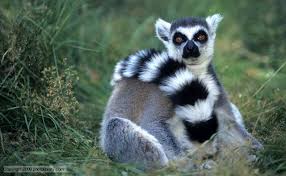
Lemurs (Prosimians/Strepsirhini)
Most lemurs live off of the coast of Africa and live in the rain-forest and typically stay at the top or mid-level of the forest. Most species spend their time in the trees, although there are a few types that are larger and spend most time on the ground. They are considered arboreal and eat fruits, nuts, and insects among a few other things.
Lemurs do not really have any sexual dimorphism since both genders are basically the same size. In lemur packs, there is one female that is in charge of the pack. The females are in dominant and are in control of the males.
The lemur species' can vary in size, the ones that live on the ground are general larger because they are more susceptible to predators. The lemurs that live in the trees do not have to worry so much about predators like on the ground, so their size stays the same. The lemurs have grown to protect themselves and their size helps that.
Spider Monkey (New World Monkey/Platyrrhini)
Spider Monkeys live in the tropical rain forests of Central and South America. They are mostly in the trees and use their tails to hang from the branches.
There are different sizes of spider monkeys depends on the species. The average is about 13.5 pounds and 3-5 feet in height. They use their tail as a fifth limb to help them move around high in the trees. They live in groups and separate to find food during the day.
Spider monkeys do not have a thumb and they have four curved fingers. Their fingers are shaped like a hook and this comes from living in the forest and trees.

Baboon (Old World Monkey/Cercopithecidae)
Baboons are part of the Old World Monkey class and they are found throughout Africa and parts of Arabia. There are five different species of Baboons.They live in rain forests, mountains and savannas.
The males are generally twice as big as the females and they have sharp canine teeth meant for defending their group. While hunting during the day, groups of 4 to 5 female and young are led by a dominant male that is the leader of the pack and fights off other males.
Males are the dominant sex and because of this they are larger and have tools that help them fight off other predators. They have to be bigger and stronger so they get the females to mate with them and so they can protect their young when they are little.

Gibbon (Lesser ape/Hylobatidae)
Gibbons can be found in the dense jungles and tropical rain forests across Southeast Asia. They are part of the lesser ape family and are more related to the great apes.
Gibbons are small and lightweight and only weigh about 75kg. They are about 90cm tall and that allows them to be able to easily move around their environment. The males are only slightly larger than the females, so sexual dimorphism is not apparent.
They have very long arms, their arms are longer than their legs because they are used to help them get around in the trees. Their arms are also used for balancing while they are walking on branches high up in the trees.

Chimpanzee (Great ape/Hominidae)
Chimpanzees are considered great apes, and they are native to the continent of Africa.
Chimps are part of groups ranging from 15-100 and they have smaller groups within the large group. Each group goes out and does their own thing and those groups change frequently because of new groups meeting. They can weigh up to 150 pounds and standing straight they can be up to four feet tall. The males mate with several females so they treat all of the young like their own because there is really no way of telling. The males are also larger so they can attract females and protect their group.
Chimpanzee's are a lot like humans and they use their opposable thumbs to pick things up. They use their emotions on their face to convey certain emotions and in many ways are like humans.

After looking at the results from each animal, the difference between them are some have sexual dimorphism and about half do not. The animals that are on the ground and have to deal with larger predators seem to be the ones with larger males for protection. The animals that live mostly up in the trees do not have any real size difference because they do not have a need to be larger. The animals that do not compete for a mate seem to not differentiate in size because they do not have to fight other males off.
Most lemurs live off of the coast of Africa and live in the rain-forest and typically stay at the top or mid-level of the forest. Most species spend their time in the trees, although there are a few types that are larger and spend most time on the ground. They are considered arboreal and eat fruits, nuts, and insects among a few other things.
Lemurs do not really have any sexual dimorphism since both genders are basically the same size. In lemur packs, there is one female that is in charge of the pack. The females are in dominant and are in control of the males.
The lemur species' can vary in size, the ones that live on the ground are general larger because they are more susceptible to predators. The lemurs that live in the trees do not have to worry so much about predators like on the ground, so their size stays the same. The lemurs have grown to protect themselves and their size helps that.
Spider Monkey (New World Monkey/Platyrrhini)
Spider Monkeys live in the tropical rain forests of Central and South America. They are mostly in the trees and use their tails to hang from the branches.
There are different sizes of spider monkeys depends on the species. The average is about 13.5 pounds and 3-5 feet in height. They use their tail as a fifth limb to help them move around high in the trees. They live in groups and separate to find food during the day.
Spider monkeys do not have a thumb and they have four curved fingers. Their fingers are shaped like a hook and this comes from living in the forest and trees.
Baboon (Old World Monkey/Cercopithecidae)
Baboons are part of the Old World Monkey class and they are found throughout Africa and parts of Arabia. There are five different species of Baboons.They live in rain forests, mountains and savannas.
The males are generally twice as big as the females and they have sharp canine teeth meant for defending their group. While hunting during the day, groups of 4 to 5 female and young are led by a dominant male that is the leader of the pack and fights off other males.
Males are the dominant sex and because of this they are larger and have tools that help them fight off other predators. They have to be bigger and stronger so they get the females to mate with them and so they can protect their young when they are little.
Gibbon (Lesser ape/Hylobatidae)
Gibbons can be found in the dense jungles and tropical rain forests across Southeast Asia. They are part of the lesser ape family and are more related to the great apes.
Gibbons are small and lightweight and only weigh about 75kg. They are about 90cm tall and that allows them to be able to easily move around their environment. The males are only slightly larger than the females, so sexual dimorphism is not apparent.
They have very long arms, their arms are longer than their legs because they are used to help them get around in the trees. Their arms are also used for balancing while they are walking on branches high up in the trees.
Chimpanzee (Great ape/Hominidae)
Chimpanzees are considered great apes, and they are native to the continent of Africa.
Chimps are part of groups ranging from 15-100 and they have smaller groups within the large group. Each group goes out and does their own thing and those groups change frequently because of new groups meeting. They can weigh up to 150 pounds and standing straight they can be up to four feet tall. The males mate with several females so they treat all of the young like their own because there is really no way of telling. The males are also larger so they can attract females and protect their group.
Chimpanzee's are a lot like humans and they use their opposable thumbs to pick things up. They use their emotions on their face to convey certain emotions and in many ways are like humans.
After looking at the results from each animal, the difference between them are some have sexual dimorphism and about half do not. The animals that are on the ground and have to deal with larger predators seem to be the ones with larger males for protection. The animals that live mostly up in the trees do not have any real size difference because they do not have a need to be larger. The animals that do not compete for a mate seem to not differentiate in size because they do not have to fight other males off.
Thursday, May 1, 2014
Analogy/Homology
Looking at a bird flying around in the sky, it would not normally cross your mind that the wing of that bird has the same structure as a dogs front leg. Birds are very different from dogs just looking at them. Dogs cannot fly around in the sky and land on high trees. Dogs do not eat bugs or lay eggs, but the homologous structure of the two species are more alike than the average person might know. The bone structure in the leg and wing are very similar, they all have the same bones just in different lengths or located in a little different order. Birds use their wings for travel and being able to escape predators in the wild. Dogs use their arms walking, standing, and survival. Birds do not use their wings for the things dogs use their legs for, they use their claws for picking things up and holding things. Their wings are basically for flying and protection. Dogs use their legs for walking around, their mouth is used for most of the picking up. Birds would have problems with predators if they had to walk around on their claws all day because they are small and other predators are faster than them. Them being able to fly helps them survive, just like dogs are able to run to get away from other harmful animals. The Tetrapod is the common ancestor that these two species have in common. These are the four-limbed vertebrates and their ancestors. There are four groups that are under the Tetrapod category and those include; amphibians, reptiles, mammals, and birds.


The wings of birds and bats are an example of an analogous connection between species. Both the bird and the bat use their wings for flight but they did not come from the same ancestor. The bone structure of the bird wing and the bat wing are different and the length of the bones in the wings are different. The bird wings are connected to the crocodile and the bat is connected to the mouse, so both of these species had evolution in their limbs to help with flight. The main reason that these species' wings developed like this was because of the need for flight even though they are not related by a common ancestor. The common ancestor of these species I could not find but the evolution was not from a species with wings, it was from a species with four limbs. Both the bird and bat have similar wings aside from one being flaps of skin and the other being feathers, and the bone structure has some major differences.

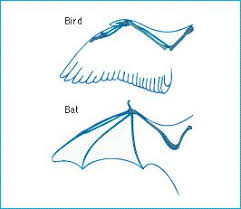
The wings of birds and bats are an example of an analogous connection between species. Both the bird and the bat use their wings for flight but they did not come from the same ancestor. The bone structure of the bird wing and the bat wing are different and the length of the bones in the wings are different. The bird wings are connected to the crocodile and the bat is connected to the mouse, so both of these species had evolution in their limbs to help with flight. The main reason that these species' wings developed like this was because of the need for flight even though they are not related by a common ancestor. The common ancestor of these species I could not find but the evolution was not from a species with wings, it was from a species with four limbs. Both the bird and bat have similar wings aside from one being flaps of skin and the other being feathers, and the bone structure has some major differences.
Subscribe to:
Posts (Atom)